If you’ve spent time on Snapchat, TikTok, Instagram, or dating apps lately, chances are you’ve seen someone type “it?” in a message. At first glance, it looks confusing. Some people think it’s a typo, while others assume it’s a secret internet code only Gen Z understands.
In reality, “it” is one of those modern texting shortcuts that exploded through online culture almost overnight. People use it casually in DMs, late-night chats, and social media conversations to move interactions from basic texting into something more personal.
The reason so many people search for “what’sit mean” is simple: the slang feels unfamiliar if you didn’t grow up around fast-moving internet culture. Additionally, its meaning changes slightly depending on tone, platform, and context.
Once you understand it, though, you’ll start noticing it everywhere.
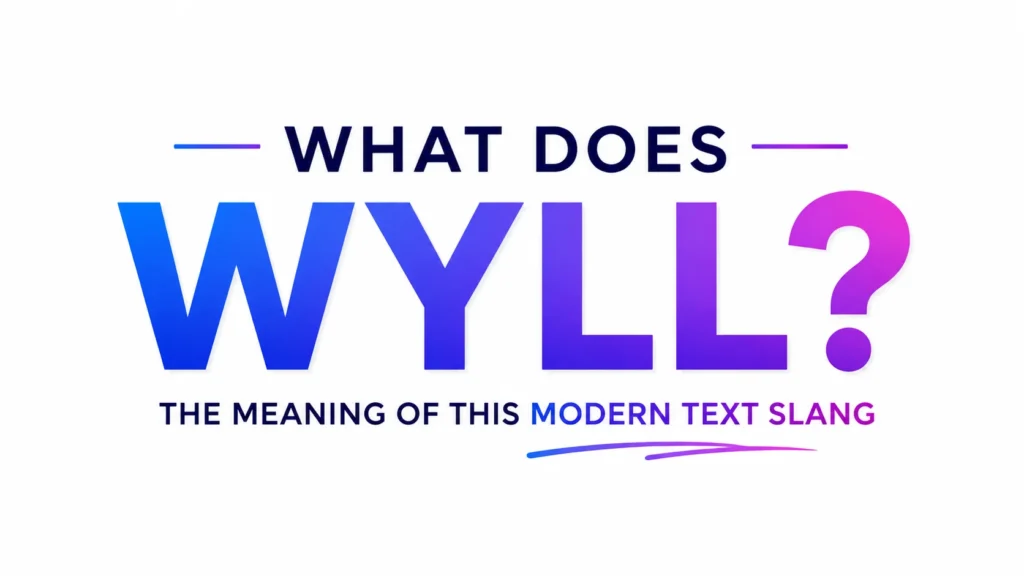
Wyll – Quick Meaning
What Does “it” Mean?
“Wyll” stands for:
“What You Look Like?”
It’s usually used in texting or online chats when someone wants to know another person’s appearance.
Most of the time, it’s shorthand for asking for:
- A selfie
- A photo
- A face reveal
- Physical appearance details
People commonly type it in lowercase:
- “wyll?”
- “Wyll”
- “yo wyll?”
Simple Examples
“We’ve been talking for days… wyll?”
“You seem cool. Wyll?”
“Before we meet, lemme know it.”
The phrase sounds casual, but the emotional tone can vary. Sometimes it feels playful and flirty. Other times, it can come across as shallow or overly direct.
That’s why context matters so much.
Origin & Background
Where Did “Wyll” Come From?
Like many internet slang terms, “it” grew from the habit of shortening phrases to save typing time. Instead of writing “what do you look like,” users compressed it into a fast, phonetic-style abbreviation.
The phrase became especially popular among younger users on:
- Snapchat
- TikTok
- Instagram DMs
- Discord
- Online gaming chats
Over time, the abbreviation shifted from “what do you look like” to the even shorter “it.”
Social Media Influence
TikTok played a huge role in spreading the slang globally. Short videos about awkward DMs, online dating, and texting culture often included screenshots where someone suddenly asked:
“wyll?”
As a result, millions of users learned the term through memes and relatable content rather than dictionaries.
How the Meaning Evolved
Originally, the phrase was mainly tied to online dating or anonymous chats. However, it slowly evolved into a broader social tool.
Today, people may use it:
- Out of curiosity
- For flirting
- To verify identity
- To deepen online interaction
- To move from anonymous chatting into a more personal connection
Even so, the tone still depends heavily on delivery.
Read More: DP Meaning in Facebook: Means in Social Media Conversations
Real-Life Conversations
WhatsApp Conversation
1t Person:
“You’re actually funny 😂”
2nd Person:
“Thanks lol”
1t Person:
“Okay but… wyll?”
2nd Person:
“You asking for a pic already?”
1t Person:
“I mean yeah 😭”
Instagram DM Example
1t Person:
“You’re active all day but never post yourself 😂”
2nd Person:
“Privacy matters 😂”
1t Person:
“Fair enough… but wyll?”
2nd Person:
“You’re persistent.”
TikTok Comment Section
1t Person:
“This comment section turning into a dating app.”
2nd Person:
“Lowkey true.”
1st Person:
“Someone already hit me with ‘wyll’ in my DMs 💀”
Text Message Example
1st Person:
“We should FaceTime sometime.”
2nd Person:
“Maybe 👀”
1st Person:
“Or you could just answer the question… wyll?”
2nd Person:
“You first.”
These conversations feel realistic because “it” usually appears during moments of curiosity, attraction, or playful tension.
Emotional & Psychological Meaning
Why People Use “Wyll”
At its core, “it” reflects curiosity.
Online communication removes physical presence, so people naturally want visual confirmation of who they’re talking to. That desire becomes even stronger when conversations become emotional, flirty, or personal.
In many cases, “it” is less about appearance alone and more about connection.
What Emotion Does It Express?
Depending on tone, it can express:
- Attraction
- Interest
- Excitement
- Suspicion
- Curiosity
- Flirtation
However, it can also reveal insecurity. Some users ask “it” because they feel uncertain continuing a conversation without knowing the other person’s appearance.
What It Reveals About Modern Communication
Modern texting culture moves fast. People often build emotional familiarity before ever seeing each other.
That’s different from traditional communication, where appearance was obvious from the start. Internet slang like “it” exists because online relationships now develop in layers.
A person may know your humor, personality, music taste, and opinions before knowing your face.
A Realistic Scenario
Imagine talking to someone through TikTok DMs for two weeks. You laugh at the same jokes, share playlists, and stay awake texting late at night.
Eventually, one person types:
“Okay serious question… wyll?”
That moment changes the interaction from anonymous comfort into personal vulnerability. Surprisingly, that’s why the phrase carries more emotional weight than people realize.
Usage in Different Contexts
Social Media
On platforms like Snapchat and Instagram, “it” is extremely common. People use it casually while getting to know mutual followers or online friends.
It’s often playful there because image-sharing already dominates the platform culture.
Friends & Relationships
Among friends, the phrase can become a joke.
For example:
“Bro we’ve been gaming for 2 years and still no wyll.”
In romantic situations, though, it usually signals rising interest.
Work or Professional Settings
“it” should generally stay out of professional communication.
Using slang like this in workplace chats, emails, or business networking can feel immature or inappropriate. Professional environments typically value clarity and respect over internet shorthand.
Casual vs Serious Tone
Casual tone:
“wyll 😂”
Serious tone:
“I feel weird not knowing what you look like.”
The same intention exists in both sentences, yet the emotional impact changes dramatically.
When NOT to Use It
Professional Conversations
Avoid using “wyll” in:
- Work chats
- Business communication
- Academic discussions
- Networking conversations
It can make interactions feel unprofessional.
Sensitive Situations
Some people feel uncomfortable sharing photos online. Asking repeatedly can create pressure or awkwardness.
Therefore, respecting boundaries matters.
Cultural Sensitivity
In certain cultures, privacy around photos is taken more seriously. A casual “wyll?” might feel intrusive instead of friendly.
When Trust Hasn’t Been Built
If you ask too early, the phrase may come across as superficial.
For example, sending “it?” immediately after saying hello can make conversations feel appearance-focused instead of genuine.
Common Misunderstandings
People Think It Means Something Offensive
Some users assume “it” has a hidden or inappropriate meaning because the abbreviation looks unfamiliar.
In reality, it’s usually harmless slang.
Tone Confusion
Tone creates most misunderstandings.
A playful:
“wyll 😂”
feels completely different from:
“wyll now.”
The second sounds demanding, while the first feels relaxed.
Literal vs Figurative Meaning
Most of the time, people literally want to know your appearance.
However, sometimes users say it jokingly without expecting an actual photo.
That’s especially common among close online friends.
Comparison Table
| Expression | Meaning | Tone | Common Platform |
| Wyll | What you look like? | Curious / Flirty | TikTok, Snapchat |
| HMU | Hit me up | Friendly | |
| WYD | What are you doing? | Casual | Texting |
| Face reveal | Show your face | Playful | Gaming / TikTok |
| Catfish? | Fake identity suspicion | Suspicious | Dating apps |
| IRL | In real life | Conversational | Social media |
| Ghosting | Suddenly disappearing | Negative | Dating culture |
| NPC | Emotionless/basic behavior | Mocking | TikTok |
Key Insight
“it” stands out because it blends curiosity with emotional risk. Unlike ordinary slang, it often shifts a conversation into a more personal stage.
Variations / Types
“Wyll tho?”
Adds extra curiosity or playful pressure.
“Lowkey wyll”
Means someone quietly wants to know your appearance.
“Face reveal?”
A softer alternative to “it.”
“Drop a selfie”
More direct and casual.
“Lemme see you”
Usually flirtier and more personal.
“You got pics?”
Common in dating conversations.
“What you lookin like?”
A longer slang variation with similar meaning.
“Send snap”
Requests a live Snapchat photo instead.
“Proof?”
Often used when someone suspects fake photos or catfishing.
“Who behind the screen?”
A humorous version common on TikTok.
How to Respond When Someone Uses It
Casual Replies
- “Maybe later 😂”
- “You first.”
- “Check my profile.”
- “I’m camera shy.”
Funny Replies
- “Nice try FBI.”
- “Imagine ruining the mystery.”
- “I look like sleep deprivation.”
Mature Replies
- “I prefer getting comfortable first.”
- “I’m private online, hope you understand.”
- “Maybe after we talk more.”
Respectful Replies
- “Sure, here’s a recent pic.”
- “I don’t mind sharing.”
- “Thanks for asking politely.”
The best response depends on your comfort level, not social pressure.
Regional & Cultural Usage
Western Culture
In Western online culture, “it” is usually viewed as casual and flirtatious.
Young users often see it as normal internet conversation.
Asian Culture
In many Asian communities, people tend to be more cautious about privacy online. As a result, random photo requests may feel overly personal.
However, younger internet users still understand the slang because TikTok culture is global.
Middle Eastern Culture
Privacy and modesty norms can influence how “it” is perceived.
Some people may avoid sharing personal photos publicly or with strangers, especially in conservative environments.
Global Internet Usage
Internet slang spreads faster than ever. Even users whose first language is not English now recognize phrases like:
- WYD
- LOL
- BRB
- Wyll
That shared language creates a sense of online belonging across countries.
Gen Z vs Millennials
Gen Z:
- Uses “it” naturally
- Comfortable with rapid slang changes
- Often communicates through abbreviations
Millennials:
- May understand it later
- Sometimes view it as unnecessary shorthand
- Prefer fuller sentences in conversation
The difference reflects changing communication habits rather than intelligence or social awareness.
Is It Safe for Kids?
Understanding the Context Matters
“Wyll” itself is not inherently dangerous or explicit.
Even so, parents should understand that it’s commonly used in online socializing and sometimes flirting. Children and teenagers may receive the phrase from strangers on social media platforms.
That’s why digital safety conversations remain important.
Kids should learn:
- Not to share personal photos carelessly
- To recognize online pressure
- To trust their instincts when conversations feel uncomfortable
The slang alone is harmless, but the context around it matters.
FAQs
What does wyll mean in texting?
“it” means “what you look like?” People use it when asking someone about their appearance or requesting a photo.
Is it flirting?
Sometimes. In many conversations, it’s used flirtatiously. However, friends may also use it jokingly.
Is it rude?
Not automatically. Still, asking too aggressively or too early can make it feel uncomfortable.
Where is it mostly used?
It’s most common on TikTok, Snapchat, Instagram DMs, Discord, and texting apps.
Is it only used by Gen Z?
Gen Z popularized it the most, but people from many age groups now recognize the term online.
Can it mean something else?
Usually no. In most internet conversations, it specifically means “what you look like?”
Should you answer when someone says it?
That depends entirely on your comfort level. You never have to share photos if you don’t want to.
Conclusion
Internet slang changes constantly, but some phrases spread because they capture real human behavior. “it” became popular because people naturally want to connect faces with personalities during online conversations.
At first, the term may seem confusing or unnecessary. However, once you understand the emotional context behind it, the phrase makes much more sense.
Whether it’s used playfully, flirtatiously, or out of simple curiosity, “it” reflects how digital communication keeps evolving. More importantly, it shows how modern relationships often begin through screens before becoming personal.
Knowing what it means helps you navigate online conversations with more confidence, awareness, and comfort.